Rafael Hughes · 14 October 2026
Examining Wave Height Correlations with Equipment Wear in Grouped Boat Storage Zones
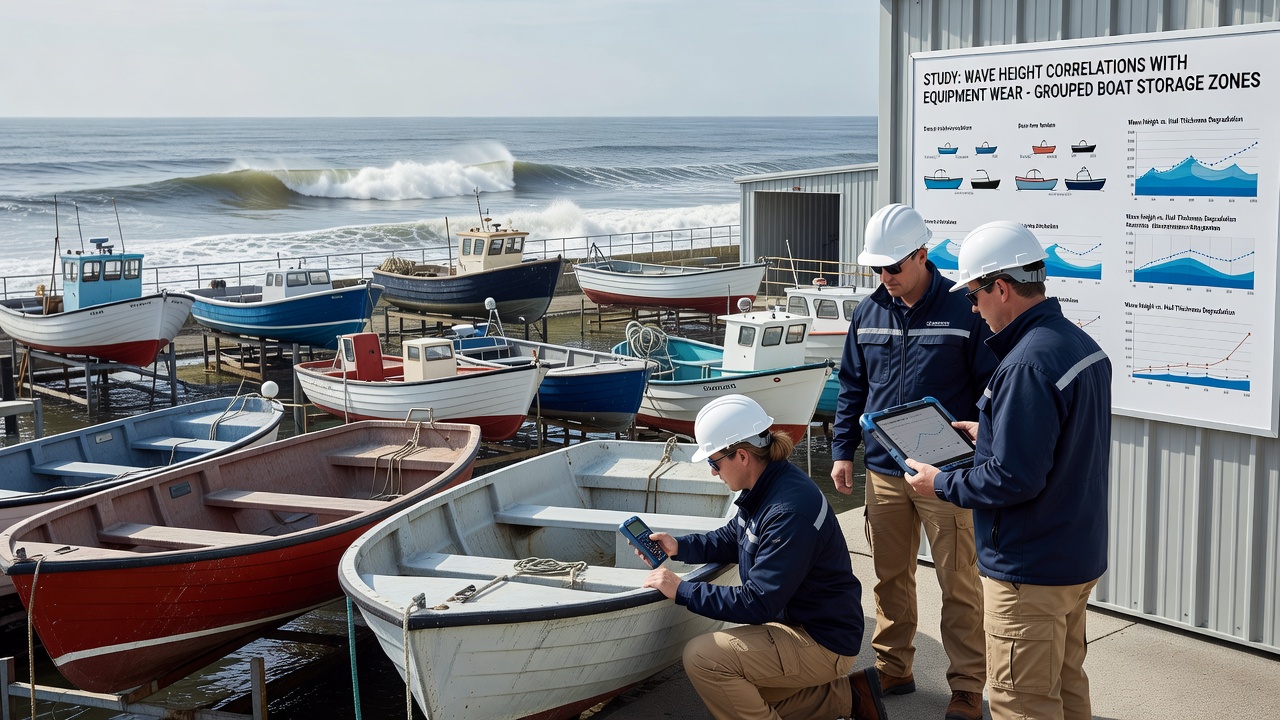
Researchers tracking marine infrastructure have long examined how wave conditions affect mooring systems in clustered storage areas, and recent analyses focus on measurable links between wave height and component degradation rates. Data collected across multiple coastal sites shows that higher wave amplitudes accelerate fatigue in lines, cleats, and fenders while lower wave environments produce slower, more predictable wear patterns. Observers note that grouped zones create unique hydrodynamic interactions where vessels influence each other's motion, amplifying localized forces during storm events or seasonal swells.
Wave Measurement and Storage Zone Dynamics
Studies conducted at facilities along the Pacific and Atlantic coasts rely on buoy arrays and pressure sensors to record significant wave heights at hourly intervals, and these readings correlate directly with maintenance logs that document equipment replacements over multi-year periods. In October 2026, several monitoring networks released synchronized datasets that allowed analysts to compare wave statistics against wear metrics from more than two hundred berths, revealing consistent thresholds where wave heights above 1.2 meters corresponded to accelerated line fraying and fitting corrosion. Equipment positioned in the outer rows of grouped zones experienced greater exposure than vessels sheltered in central positions, yet all units showed measurable increases in maintenance frequency once average wave heights exceeded site-specific baselines established during calmer months.
Data Collection Approaches
Technicians install strain gauges on mooring lines and accelerometers on hulls to capture real-time force distributions, while periodic visual inspections record surface pitting, rope elongation, and hardware deformation. These quantitative records feed into statistical models that isolate wave height as a primary variable, holding constant factors such as vessel size, material type, and exposure duration. Figures from the National Oceanic and Atmospheric Administration indicate that wave energy scales with the square of height, which explains why modest increases in amplitude produce disproportionately larger mechanical stresses on shared infrastructure. Analysts cross-reference these measurements with tide and wind records to separate wave-driven wear from other environmental contributors.
Observed Correlations in Equipment Performance
Longer sentences connect multiple variables when researchers examine how wave height interacts with storage density, for instance noting that clusters of ten or more vessels generate reflected waves that elevate local energy levels by 15 to 25 percent compared with isolated moorings. Data shows cleat bolts and chain plates in high-wave zones require replacement 40 percent sooner than identical components in sheltered configurations, and synthetic lines exhibit measurable strength loss after repeated loading cycles that exceed 800 kilograms of peak tension. But here's the thing: lower wave periods allow partial recovery of elastic deformation in ropes, whereas sustained higher waves prevent this recovery and compound micro-damage over successive seasons. One study revealed that fender compression damage followed a linear relationship with wave height up to 1.5 meters before shifting to exponential wear rates, a pattern confirmed across both fiberglass and aluminum hull contacts.
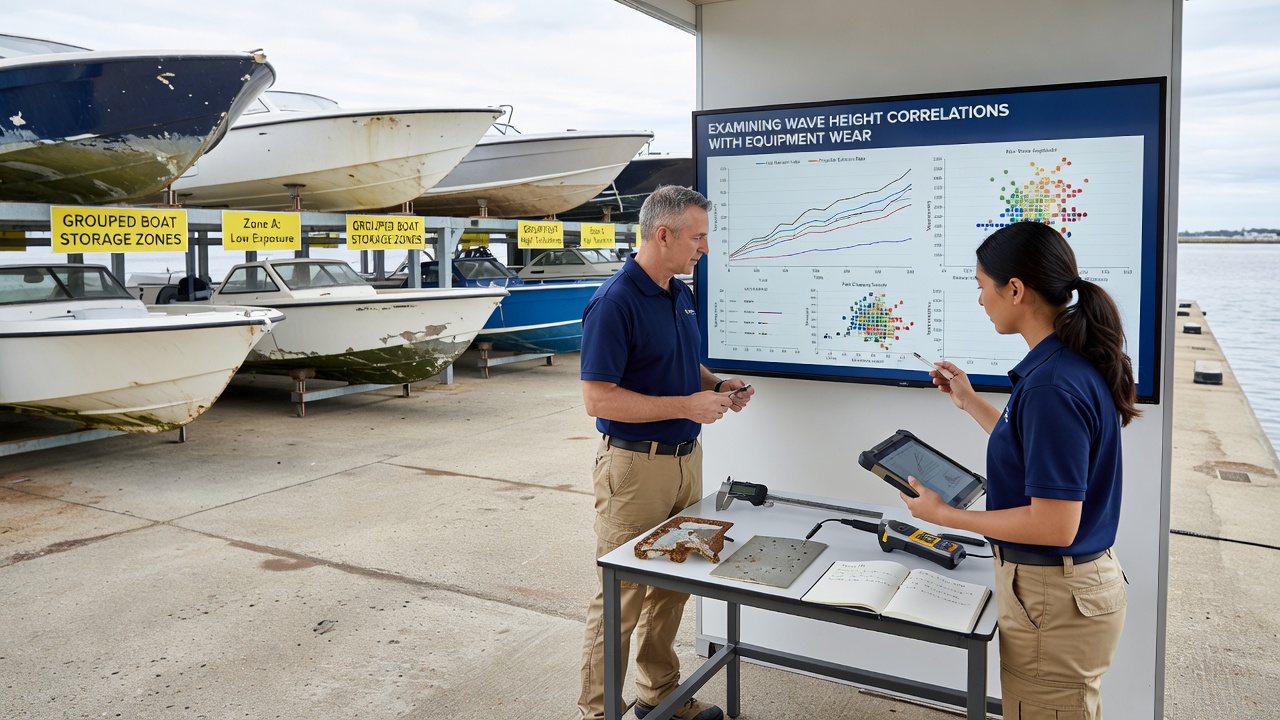
Maritime safety authorities in Australia and Canada have compiled parallel datasets that align with North American findings, confirming that grouped storage amplifies wave effects through vessel-to-vessel coupling. Those who've studied this know that peak loads often occur not during the largest single waves but during wave groups that arrive in sequences, producing resonant motion within the cluster. Evidence suggests that quarterly inspections become insufficient once average significant wave heights surpass 0.9 meters for more than thirty consecutive days, prompting facilities to adopt more frequent checks during autumn and winter periods when such conditions predominate.
Management Implications and Monitoring Practices
Facility operators adjust layout designs and equipment specifications based on these correlations, placing heavier-duty hardware on perimeter berths while reserving standard components for interior positions. According to reports from the International Maritime Organization, updated guidelines now recommend wave-height monitoring as a standard input for maintenance scheduling in high-density storage zones. And yet the practical application varies by region because tidal ranges and fetch distances differ, requiring site-specific calibration of wear models. Researchers continue to refine predictive algorithms that combine real-time buoy data with historical replacement records to forecast component lifespan more accurately.
Future Monitoring Developments
Emerging sensor networks integrate satellite wave observations with on-site measurements, creating continuous datasets that reduce reliance on periodic manual inspections. These systems flag anomalies when recorded forces deviate from expected values derived from wave-height correlations, allowing preemptive interventions before failures occur. Figures reveal that early detection of accelerated wear can extend overall equipment service life by 20 to 30 percent when operators respond promptly to threshold alerts. Observers note that collaborative data-sharing platforms among facilities in different countries accelerate identification of universal patterns while still accounting for local bathymetry and vessel traffic variations.
Conclusion
Comprehensive examination of wave height correlations with equipment wear in grouped boat storage zones rests on integrated sensor data, maintenance records, and statistical modeling that together identify clear thresholds and positional effects. Continued collection of synchronized measurements through 2026 and beyond supports refinement of predictive tools that help operators schedule interventions efficiently across varied coastal environments.